
Project Highlights:
- CORE Electric Cooperative
- Headquartered in Sedalia, CO
- Serves over 400,000 residents
- 13,000 km² service area along Colorado’s Front Range
- Largest electricity cooperative in Colorado
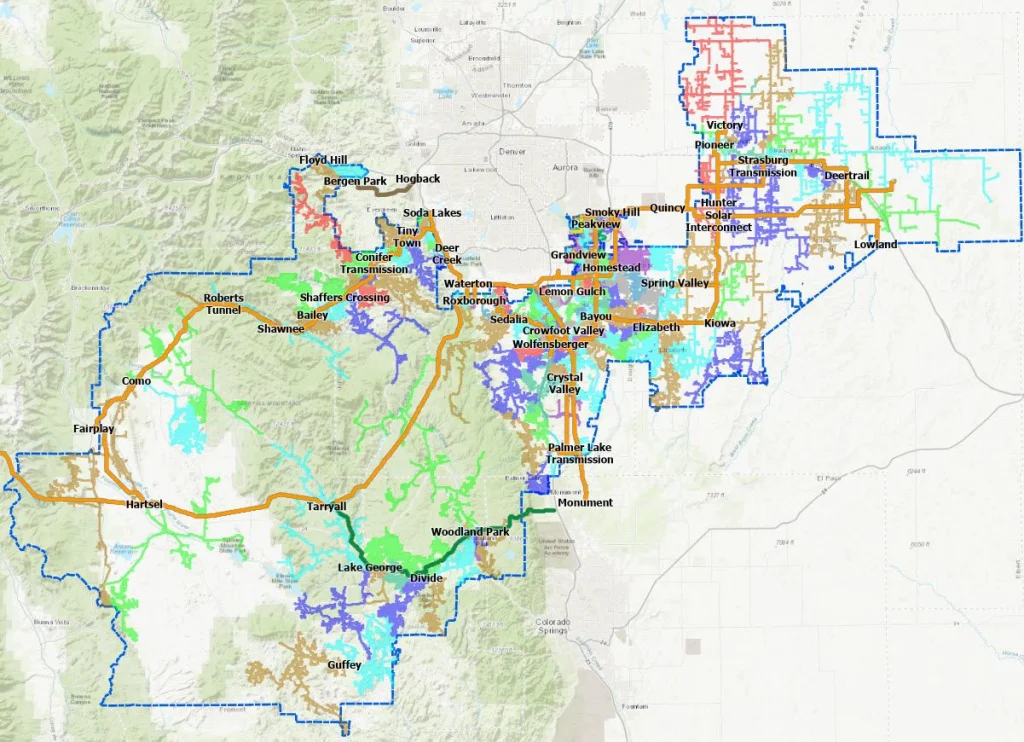
CORE is expanding its electricity distribution network and is evaluating a future operating model that would source electricity generation from the wholesale market to support continued growth in demand from its members. This approach would require the cooperative to develop and manage transmission assets that connect its distribution network to new generation sources. To support these long-term objectives, CORE is modernising its operational and business systems to enable more efficient management of its growing network infrastructure.
Upgrade to NIMS
To support its wider digital transformation programme, CORE recognised that its legacy GIS required modernisation. Migrating to ArcGIS Utility Network, Esri’s next-generation Network Information Management System (NIMS), provides a modern 64-bit platform capable of integrating more effectively with enterprise applications, including the planned Advanced Distribution Management System (ADMS).
CORE also required a comprehensive network information model capable of supporting the management of both electricity distribution and transmission networks. The new solution provides the detailed data structures needed to improve network operations, asset management, outage response and future system planning as the organisation continues to expand.
“We are proud to be one of the first mid-sized utility companies to unify Transmission and Distribution in a single ArcGIS Utility Network that incorporates both spatialised units and equipment assemblies. This achievement represents the realisation of our goal for a “high-fidelity” transformation and positions the CORE GIS as a leading platform, prepared for the evolving demands of modern utilities. We deeply appreciate UDC’s partnership and knowledge, which were vital to our accomplishment.”
Duane Holt, GIS Manager, CORE
Enabling the Digital Twin
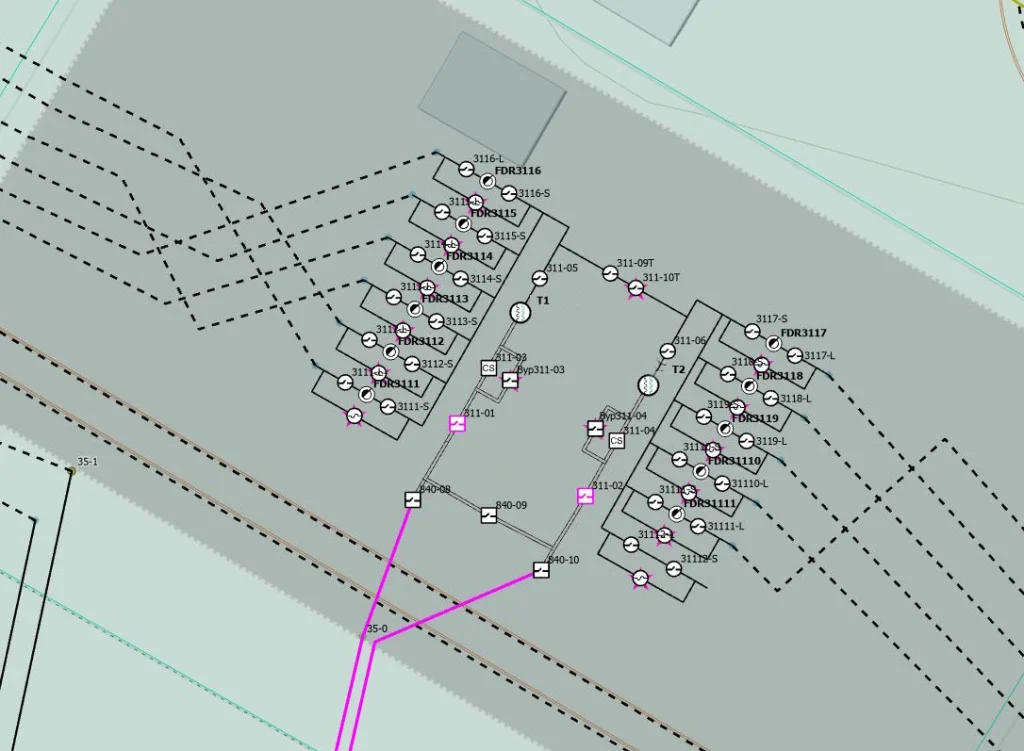
As part of its GIS data migration preparation, CORE evaluated both the Essentials and Electric Utility Network out-of-the-box data models. The cooperative chose to extend beyond the standard configurations by incorporating fully spatialised units and assemblies within individual network devices. This approach enabled the position, orientation and relationships between electrical components to be modelled at a level of detail required to support the creation of a digital twin.
For CORE, units extend beyond traditional network assets such as poles, vaults and transformers to include components such as capacitors, switches and regulators. Standardised digital representations were created for each feature type and imported using bespoke migration tools. These tools established spatial relationships between network structures within the new Network Information Management System (NIMS), providing end-to-end traceability from generation through to customer service. This capability supports improved outage management, asset maintenance and operational decision-making.
The project scope was subsequently expanded to bring CORE’s electricity transmission and distribution networks together within a single NIMS model.
Supporting Future Growth and Acquisitions
By consolidating its distribution and transmission networks within a single NIMS environment, CORE is building on its existing operational support model while avoiding significant redevelopment efforts to accommodate future transmission acquisitions.
The digital twin’s detailed data model and spatially enabled network representation provide CORE with a strong technical foundation for future capabilities, particularly when integrated with its Outage Management System (OMS) and planned Advanced Distribution Management System (ADMS).
Through this modern approach, CORE is strengthening its ability to support its members’ (customers) evolving needs while enabling greater network reliability, integration of alternative generation sources and future innovation across its operations.
“We achieved incredible granularity across asset types, connectivity rules and terminals and executed substantial configuration on the UN, which will in turn help fast-track the full realisation of a digital twin for CORE.”
Dax Wolfinger, VP UN Transformation UDC
Project Team and Scope
UDC collaborated with teams across GIS, IT and Engineering at CORE to ensure the implementation aligned with future operational requirements and the cooperative’s evolving business needs.
The CORE project consolidated five electricity network tiers: generation, transmission, substations, sub-transmission express and distribution into a single integrated network model. UDC’s scope included:
- Assessing existing workflows and data structures to define project requirements
- Upgrading to the latest ArcGIS Enterprise and ArcGIS Pro releases
- Conducting data modelling workshops
- Performing data cleansing using UDC’s automated migration tools
- Configuring symbology, map documents, network diagrams, containers, filter displays and editing templates within ArcGIS Pro
- Implementing and extending Esri attribute rules
- Developing tools to align and snap electricity lines to spatialised units
- Associating 95% of network structures using UDC-developed tools
- Developing JSON configurations to support Outage Management System (OMS) integration
- Creating test plans and validation scripts
- Migrating electricity network data into the Network Information Management System (NIMS)
- Providing knowledge transfer and ongoing support guidance